By Mizanul Huq, Managing Director, Eduva Pathway As a counsellor working closely with Bangladeshi students and families, one thing I see again and again is this: many students become serious about studying abroad only when they are already late. They start thinking about the country, university, documents, IELTS, finances, and visa all at the same time. That creates pressure, confusion, and often unnecessary mistakes.
This is why I always advise students to prepare a proper starter pack before they begin their university and student visa journey. Whether you have completed HSC, CAIE A Levels, or your undergraduate degree, the first step is not the visa form. The first step is getting yourself ready.
If you prepare properly at the beginning, the rest of the process becomes much smoother. This is true whether you are aiming for the UK, Canada, Australia, the USA, Germany, Japan, Finland, or another destination. Each country has its own rules, but there is a common foundation that almost every serious student must build before applying.
This blog is written to help Bangladeshi students understand that foundation in a simple and practical way.
- Start with your academic goal, not your visa goal
Before collecting papers, take a step back and ask yourself a few honest questions. What do you want to study? Why do you want to study that subject? Are you applying after HSC, after A Levels, or after an undergraduate degree? Do you want a career-focused degree, a research-focused degree, or a pathway into migration and work opportunities later? Students who are clear about their academic direction usually make better country and university choices. Students who only say “I want to go abroad somehow” often waste both time and money.
Your first checklist item is clarity. Write down the subject areas you are genuinely interested in, the level of study you are applying for, and the kind of future you want after graduation. - Keep your passport ready and valid
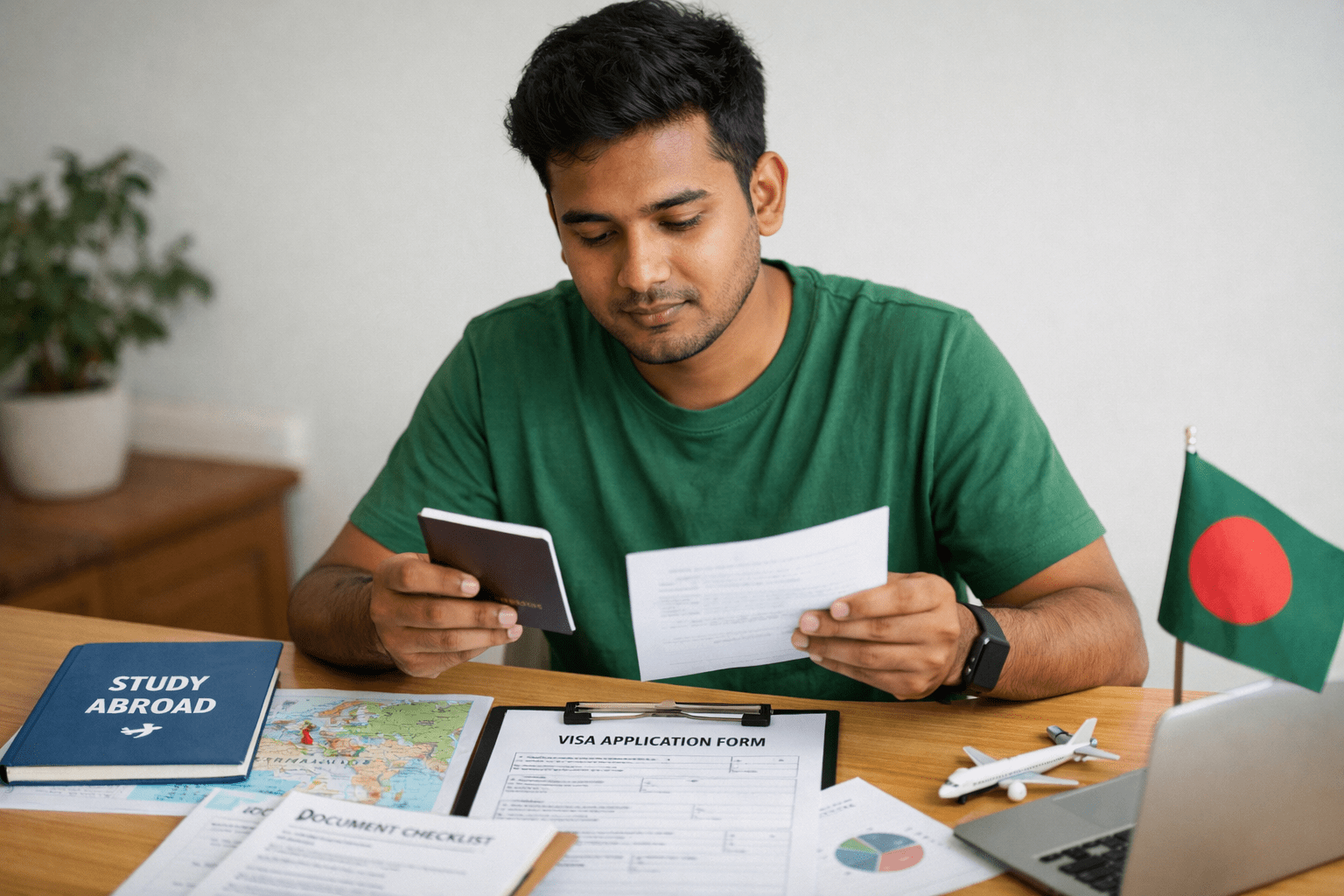
A valid passport is one of the first basic requirements for almost every application journey. If you do not have a passport yet, apply early. If you already have one, check the expiry date carefully and make sure all personal details match your academic documents.
Students are often surprised by how many later steps depend on passport consistency. Your university application, language test registration, visa file, biometric appointment, and travel booking all become easier when the passport is ready from the start. - Organise all academic documents in one place
Many delays happen because students know they have good results but cannot quickly produce the right documents. Build one complete academic folder. This should normally include your certificates, transcripts or mark sheets, predicted grades if you are still studying, medium of instruction evidence where relevant, and any provisional results that may be needed during the early stage.
For Bangladeshi students, it is wise to prepare both physical photocopies and high-quality scanned copies in PDF format. Name your files properly. Do not save a file as “scan1” or “new final latest.” Save it as “HSC Transcript,” “A Level Certificate,” or “Bachelor Transcript Semester Wise.” A well-organised student usually moves faster through the entire process. - Understand your English language plan early
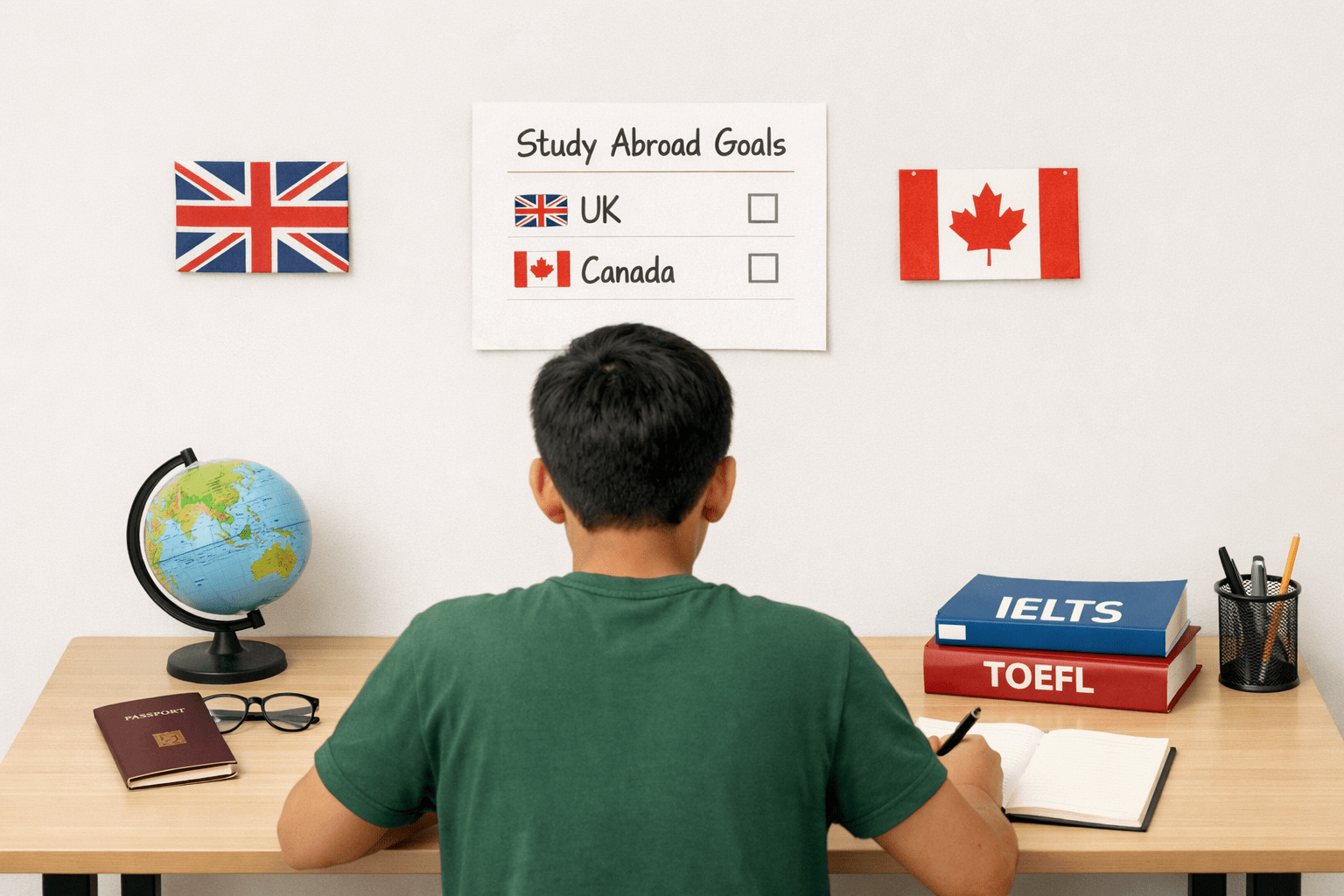
One of the biggest mistakes students make is delaying their English requirement planning. Even before you choose your final universities, you should understand what type of language proof you may need. In many cases this means IELTS, but some institutions may consider alternatives depending on country, course, and previous education background.
The important point is this: do not assume. Research early, ask for guidance, and build a timeline. If an IELTS score will strengthen your profile, prepare ahead of deadlines rather than treating it as a last-minute task. - Make a realistic country shortlist
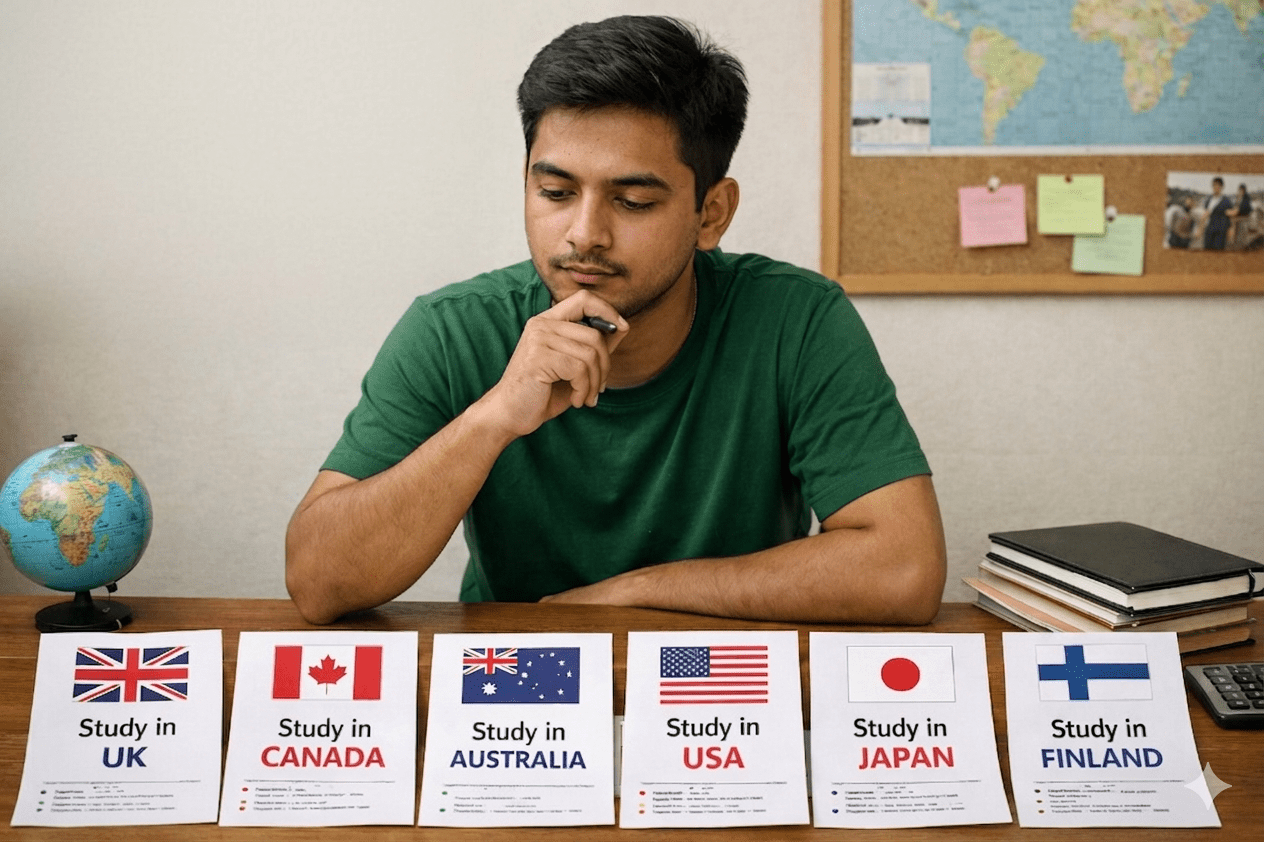
Students often begin by asking, “Which country is best?” In reality, the better question is, “Which country is best for me?” The right destination depends on your budget, academic profile, career goal, preferred environment, and family expectations.
Make a shortlist of two to four suitable countries, not ten. Compare them in a simple chart: tuition range, living cost, visa pathway, part-time work rules, post-study options, weather, language environment, and family comfort level. When your shortlist is realistic, your university research becomes more focused and your visa preparation later becomes much easier. - Prepare your finance story before anyone asks for it
Financial readiness is one of the most important parts of the study abroad journey, and students should not wait until the visa stage to think about it. Sit with your family early and discuss the real numbers. How much can be spent on application costs, test fees, deposits, tuition, living expenses, and emergency funds? Who will be the sponsor? What documents can that sponsor actually provide?
Many students have genuine family support, but they do not organise the supporting evidence properly. Your finance preparation should include understanding your source of funds, sponsor relationship, bank history, business or employment proofs if relevant, and whether your chosen country expects specific kinds of financial evidence. - Build your personal profile, not only your marks
Good grades matter, but they are not the full story. Universities often look at the overall student profile. That means you should begin collecting the experiences that help explain who you are. This may include extracurricular activities, volunteering, internships, competitions, community work, leadership roles, training courses, or relevant projects.
If you are applying after A Levels or HSC, your profile helps show maturity and direction. If you are applying after undergraduate study, it helps show progression and seriousness. Keep a simple list of your achievements, dates, responsibilities, and outcomes. Later, this becomes useful for your CV, statement of purpose, scholarship applications, and even visa credibility. - Prepare your SOP, personal statement, or motivation story
A statement of purpose is not just a formal essay. It is your academic story. It explains where you have come from, what you want to study, why you chose the destination, and how your future plans connect to your education.
Students who prepare this story early usually perform better throughout the process. They write stronger university applications, answer interview questions more confidently, and explain themselves more clearly during the visa stage. Even if you are not writing the final version yet, start with notes. Why this subject? Why now? Why this country? Why are you a serious student? Those answers matter. - Line up your recommendation letters and referees
Many students forget this until deadlines are very close. If your universities may ask for recommendation letters, identify your possible referees early. These could be school teachers, college faculty members, university lecturers, department heads, employers, or supervisors, depending on your stage of study and the programs you are targeting.
Do not wait until the final week. Good referees need time. Share your academic goals with them and keep their contact details ready. A thoughtful recommendation letter is always better than a rushed one. - Create a clean student CV and document list
A proper CV is useful even when it is not mandatory. It helps universities understand your academic background and achievements quickly. It also helps counsellors and admission teams review your profile properly.
At the same time, create a master document list for yourself. Divide it into sections such as identity documents, academic documents, test scores, financial documents, work documents, writing documents, and country-specific documents. This one step can save you from confusion later. - Get ready for course-specific extras
Some students need more than grades and English scores. Depending on the course and country, you may need a portfolio, writing samples, research proposal, entrance test, interview, or professional experience proof. Creative programs, architecture, design, business, law, health-related fields, and postgraduate research tracks may each have additional expectations.
This is why generic planning is not enough. Once you shortlist your courses, check each institution carefully and identify any extra requirements well before deadlines. - Keep medical, police, and identity checks in mind
Different countries may ask for medical checks, biometrics, police certificates, tuberculosis screening, insurance papers, or identity verification at different stages. These are not always required at the first university application stage, but they are often important by the visa stage.
So the smart approach is to stay mentally prepared. Know your travel history, keep past visa records if you have any, make sure your name spelling is consistent across documents, and avoid last-minute panic when identity or background verification becomes necessary. - Make a scholarship and affordability plan
Many Bangladeshi students ask only one scholarship question: “Can I get one?” A better question is: “Am I building a profile that deserves one, and can my family still support the plan if the scholarship is partial?”
You should prepare for both outcomes. Research scholarships, tuition discounts, bursaries, assistantships, and country-specific support. But also calculate your plan realistically in case the scholarship does not fully cover costs. Affordability planning is part of responsible decision-making. - Build a timeline and stop depending on memory
Applications become stressful when students try to keep everything in their head. Build a simple timeline in a notebook, spreadsheet, or notes app. Track your passport status, test booking, result publication, university shortlist, application deadlines, document collection, deposits, visa preparation, and pre-departure planning.
When you can see your journey on a timeline, the entire process feels more manageable. Small steps become clearer. Progress becomes visible. Panic becomes lower. - Create your digital starter pack folder
I strongly recommend that every student make one organised digital folder before starting applications. Inside it, keep clear subfolders such as Passport, Academic Documents, English Test, CV, SOP, Recommendation Letters, Financial Papers, Work Experience, and Country Research.
This may sound simple, but it saves enormous time later. In international applications, speed and organisation matter. Students who can produce the right document at the right time usually face fewer delays.
Common mistakes Bangladeshi students should avoid
The most common mistakes are predictable: applying without a clear subject goal, choosing a country only because friends are going there, delaying IELTS, ignoring finances until the last moment, depending on weak scans, mismatching names or dates across documents, and assuming that every country works the same way.
Another major mistake is confusing university application readiness with visa readiness. The visa process often begins after admission or sponsor documentation, so the smartest students prepare the foundation early instead of waiting for pressure to build.
My final advice to students
If you are a Bangladeshi student planning to study abroad after HSC, A Levels, or undergraduate study, do not begin with panic. Begin with preparation. A strong starter pack does not guarantee admission or a visa by itself, but it gives you a clean, credible, and confident beginning.
In today’s world, students who are organised always move ahead faster than students who are only enthusiastic. Dream big, but prepare properly. That is the difference between a stressful journey and a successful one.