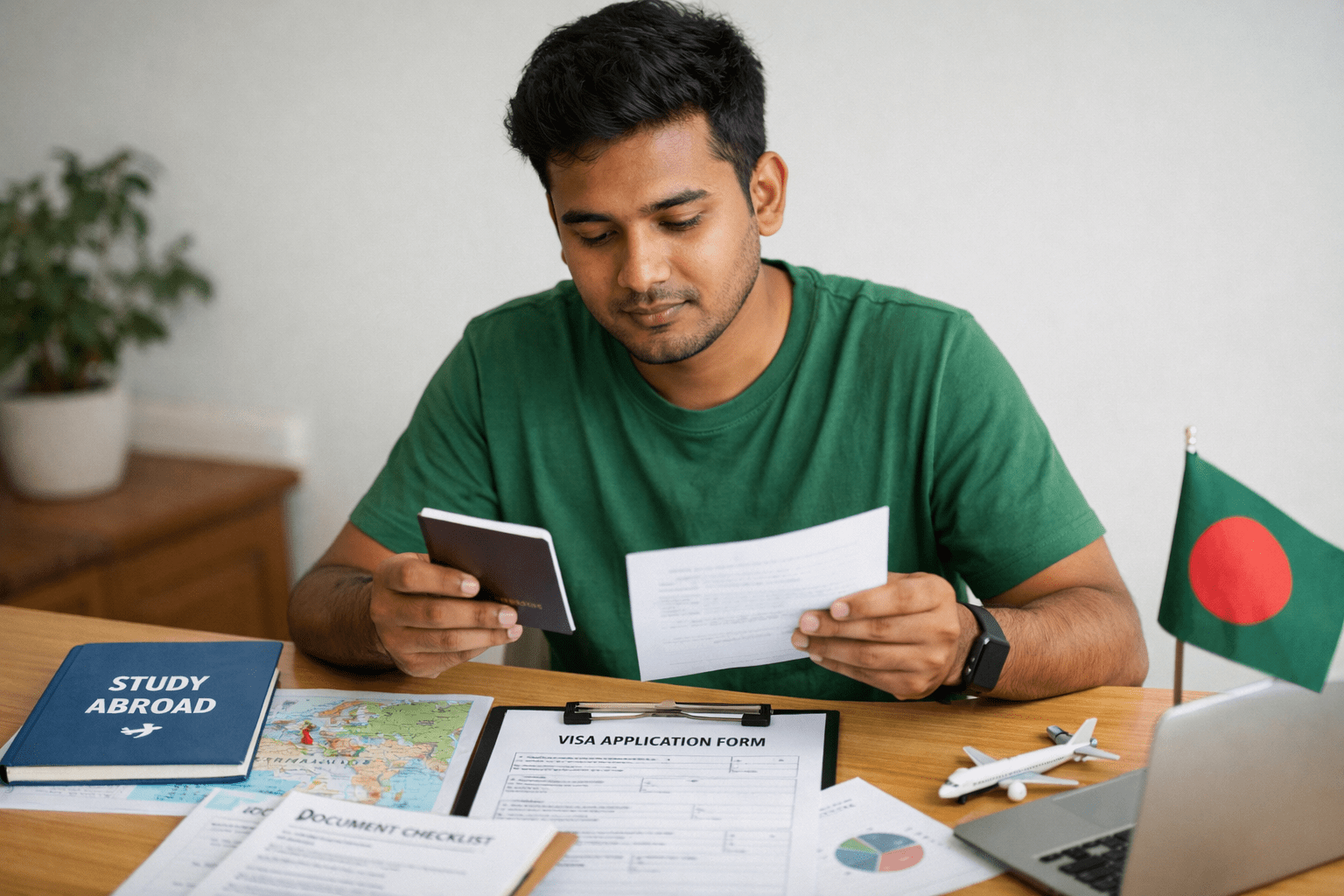
By Mizanul Huq, Managing Director, Eduva Pathway
As someone who works closely with students and families planning to study abroad, I often notice one common mistake: many students think the visa process starts when they sit down to fill out the visa form. In reality, a strong visa application starts much earlier.
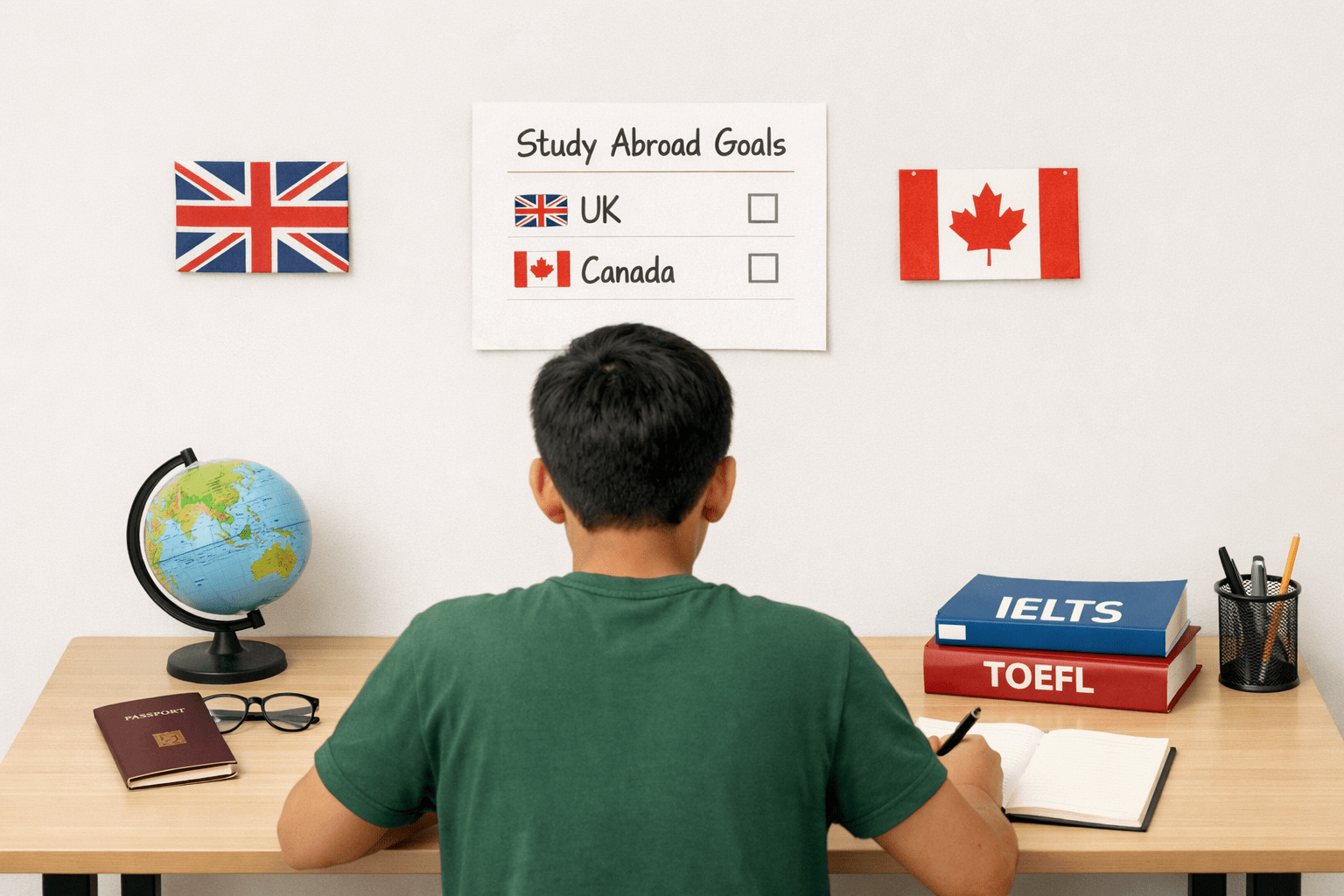
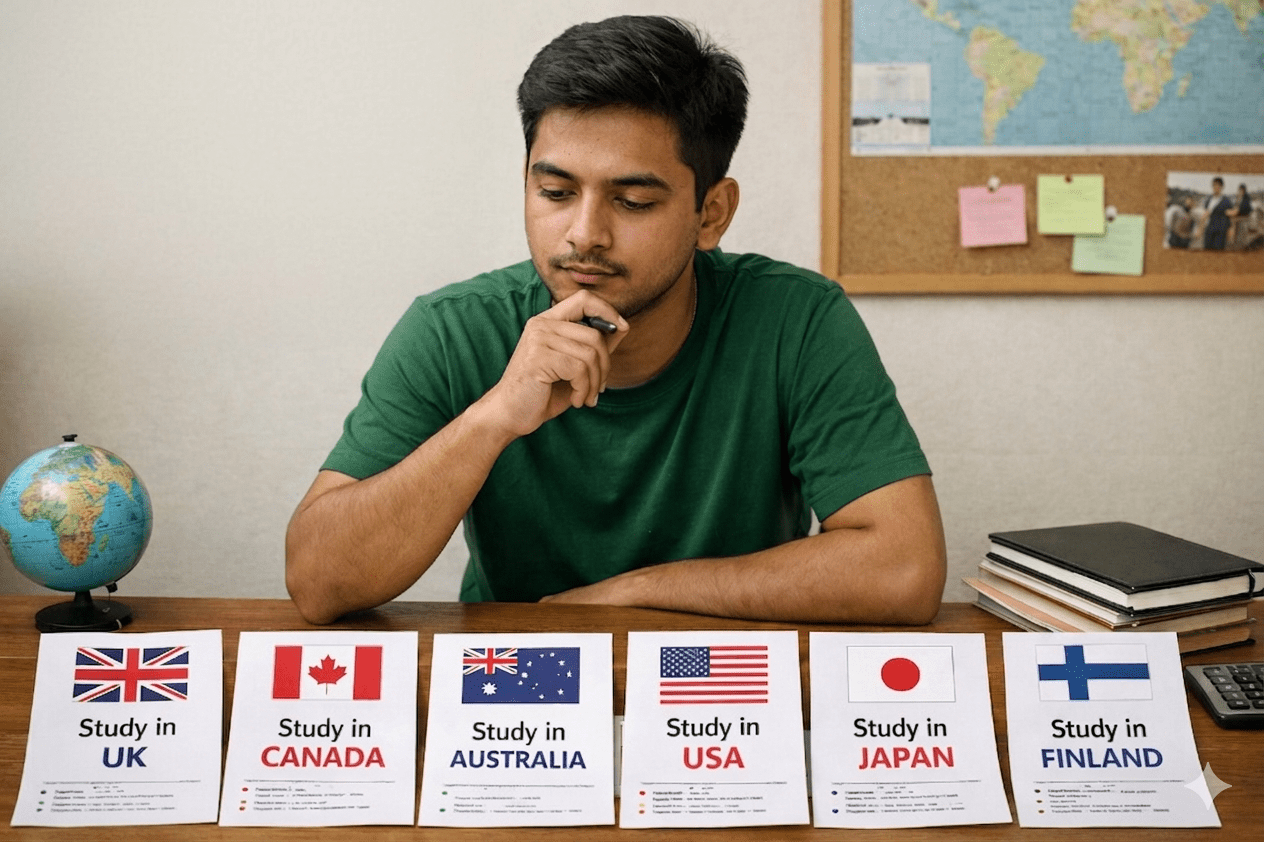
If you are a Bangladeshi student aiming for destinations like the UK, Canada, Australia, the USA, Germany, Japan, or Finland, the smartest thing you can do is build your starter pack before you even begin the formal visa stage.
This is the advice I give students at Eduva Pathway in simple words: do not begin with panic, begin with preparation.
A student visa application is not only about papers. It is about showing a clear story. Who are you? What do you want to study? Why does the course make sense for your background? How will you pay for it? Are your documents clean, consistent, and ready? If you cannot answer those questions properly, your visa journey becomes harder than it needs to be.
So in this blog, I want to explain a student-friendly starter pack that can help you prepare from your side before applying for almost any student visa.
First, prepare your academic story. Before any embassy or visa officer sees your file, you should be able to explain your academic journey clearly. That means your SSC, HSC, O Levels, A Levels, diploma, bachelor’s degree, transcripts, certificates, and any other academic record should be organised and easy to access. If there are study gaps, low grades, subject changes, or breaks in education, do not hide them. Understand them, and be ready to explain them honestly and clearly.
Second, prepare your passport properly. Many students get excited about university applications but overlook the passport. Make sure your passport is valid, readable, and has enough validity left for the process ahead. Also make sure your personal details are consistent everywhere, including your name spelling, date of birth, and all supporting documents. Small inconsistencies create unnecessary delays and questions.
Third, decide your destination and course with logic, not emotion only. A visa file becomes stronger when your course choice makes sense. Your selected subject should connect with your academic background, interests, and long-term goals. If a student randomly chooses a course or country without being able to explain why, the overall case becomes weak. Before the visa stage, you should be able to explain three things in simple language: why this country, why this university, and why this course.
Fourth, prepare your English proficiency plan early. In many cases, your IELTS, PTE, TOEFL, or equivalent language result plays an important role in admission and visa readiness. Do not leave this for the last moment. Language test planning affects timelines, university offers, and sometimes even visa credibility. A rushed test plan often creates a rushed application.
Fifth, build your finance file before anyone asks for it. This is one of the most important parts of the starter pack. Students and parents often focus on the university offer first and think they will arrange finances later. That is risky. Before the visa process starts, you should understand who will sponsor you, what documents that sponsor can provide, whether the source of funds is explainable, whether bank movements look natural, and whether tuition and living cost planning makes sense. A weak finance story can damage an otherwise strong application.
Sixth, prepare your sponsor story carefully. If your parents, sibling, spouse, or another sponsor will support your study, the relationship and financial capacity should be clear on paper. It is not enough to say someone will support you. The file should show who they are, how they are related to you, what they do, how they earn, and how the funds are connected to your education plan. Strong visa files are not only funded; they are explainable.
Seventh, keep your personal history consistent. Make a clean record of previous travel, past visa refusals if any, previous applications, and work or study history. Never guess, hide, or change your story from one form to another. Consistency matters. A simple timeline of your own history can save you from major mistakes later.
Eighth, prepare for health, police, and compliance-related steps early. Depending on the country and your profile, you may need a tuberculosis test, medical exam, police clearance, or other country-specific checks. These are often not the first thing students think about, but delays in these areas can disrupt an entire intake plan.
Ninth, prepare your digital file properly. Keep colour scans of your passport, academic documents, test scores, photographs, financial papers, sponsor papers, offer letters, fee receipts, and important forms in one organised folder. Name your files clearly. Use one active email address and one working phone number for the whole process. Digital confusion causes real problems.
Tenth, prepare your mindset. A student visa process is not something to do casually. It needs honesty, patience, accuracy, and discipline. Do not depend on random advice from social media comments or friends who applied to a different country in a different year. Rules change. Processes change. Even the same country can have different requirements depending on course level, age, location, and institution type.
The good news is that while each country has its own system, the core student starter pack is surprisingly similar across most major destinations.
For the UK, students should be ready for the basics that sit at the centre of the application: a valid passport, a Confirmation of Acceptance for Studies, and proof of funds where required. Some applicants may also need ATAS clearance, tuberculosis test results, or sponsor consent documents, and students under 18 need parental or guardian consent as part of the file.
For Canada, students should think beyond the offer letter alone. The letter of acceptance is essential, but in most post-secondary cases students also need a provincial or territorial attestation letter from their school. Canada also expects proof of funds, and it recommends a clear letter of explanation. Depending on the case, medical exams, police certificates, and custodianship arrangements for minors may also matter.
For Australia, students should prepare for a structured digital process. Students typically need evidence from their education provider, and the system may ask for documents connected to the Genuine Student requirement. Financial evidence, English preparation, and extra documents for under-18 cases should be thought through early rather than at the last minute.
For the USA, students should understand that the process is closely tied to the university and the interview stage. A student normally needs admission to an approved institution, a Form I-20, SEVIS registration and fee payment, and a completed DS-160 before the visa interview. At interview stage, students should be ready to show academic preparation, financial readiness, and a believable study plan.
For Germany, students should treat admission readiness and financial planning very seriously. The student visa process generally starts through the German mission abroad, and applicants need to show that they have been accepted for study. Financial preparedness is especially important, and students should check the exact proof of livelihood method accepted in their case before proceeding.
For Japan, students should remember that the visa filing itself is usually built around a few key items: a valid passport, a visa application form, a recent photograph, and the Certificate of Eligibility (CoE). From a student side, that means you should prepare early with clean academic papers, funding proof, and the documents your school may need before your CoE is issued, because once the CoE stage moves properly, the visa submission becomes much more straightforward.
For Finland, students should think in terms of a residence permit for studies rather than just a visa if the course will last more than 90 days. Students should be ready with a valid passport, passport photo, copy of the passport biodata page, acceptance from the institution, proof of funds, insurance, and proof of paid tuition fee or scholarship where relevant. It is also important to remember that Finland requires students to prove their identity and give fingerprints at a Finnish mission before the application can be processed.
So what should a smart Bangladeshi student do before starting any visa application?
- Prepare your passport.
- Prepare your academic papers.
- Prepare your test scores.
- Prepare your funding plan.
- Prepare your sponsor evidence.
- Prepare your explanation for course and country choice.
- Prepare your history honestly.
- Prepare your scans and digital folder.
- And most importantly, prepare early.
I also want students to remember something very practical: admission and visa are connected, but they are not the same thing. Getting an offer is a milestone, not the finish line. A student who gets an offer without preparing the visa side can still face serious problems later.
At Eduva Pathway, I always encourage students to build their visa starter pack before they feel pressured by deadlines. When you prepare early, you make better decisions. You choose universities more carefully. You avoid weak documentation. You reduce stress for yourself and your family. And you give your case the clarity it deserves.
If you are planning to study abroad, do not wait until the last moment to become serious. Start by becoming organised. That one decision can strengthen your entire journey.
Because in most cases, a successful student visa application does not begin at the embassy. It begins at your desk, with the right documents, the right plan, and the right guidance.