
By Aisha Ahmed, Student Counsellor, Eduva Pathway Every year, I speak to Bangladeshi students who are intelligent, ambitious, and fully capable of studying abroad, but they still delay, confuse, or damage their own applications because of a few avoidable mistakes. In many cases, the problem is not potential. The problem is preparation, timing, and clarity.
Students often think the biggest challenge is getting admitted or getting a visa. In reality, the biggest challenge is usually making the wrong moves before the real process even starts. A weak beginning often creates pressure all the way to the final application.
This guide is written for Bangladeshi students in a simple and practical way. My goal is not to frighten anyone. My goal is to help students avoid the mistakes that repeatedly create problems during university applications and visa preparation across popular destinations such as the UK, Canada, Australia, the USA, Japan, and Finland.
- Starting too late
One of the most common mistakes is waiting until the last minute. Students sometimes begin researching countries, universities, English requirements, finances, and documents only when an intake is already close. That creates unnecessary panic. A rushed student makes rushed decisions, and rushed decisions usually lead to poor university choices, incomplete documents, or weak visa preparation.
A strong study abroad journey should begin early. Students need time to compare universities properly, understand academic requirements, prepare English tests if needed, collect documents, discuss finances with family, and build a realistic application plan. The earlier you start, the more control you have.
- Choosing a country because of hype, not fit
Another major mistake is choosing a country because a friend went there, a relative recommended it casually, or social media made it look easy. That is not a strategy. The right country depends on your subject, budget, profile strength, comfort level, long-term goals, and family expectations.
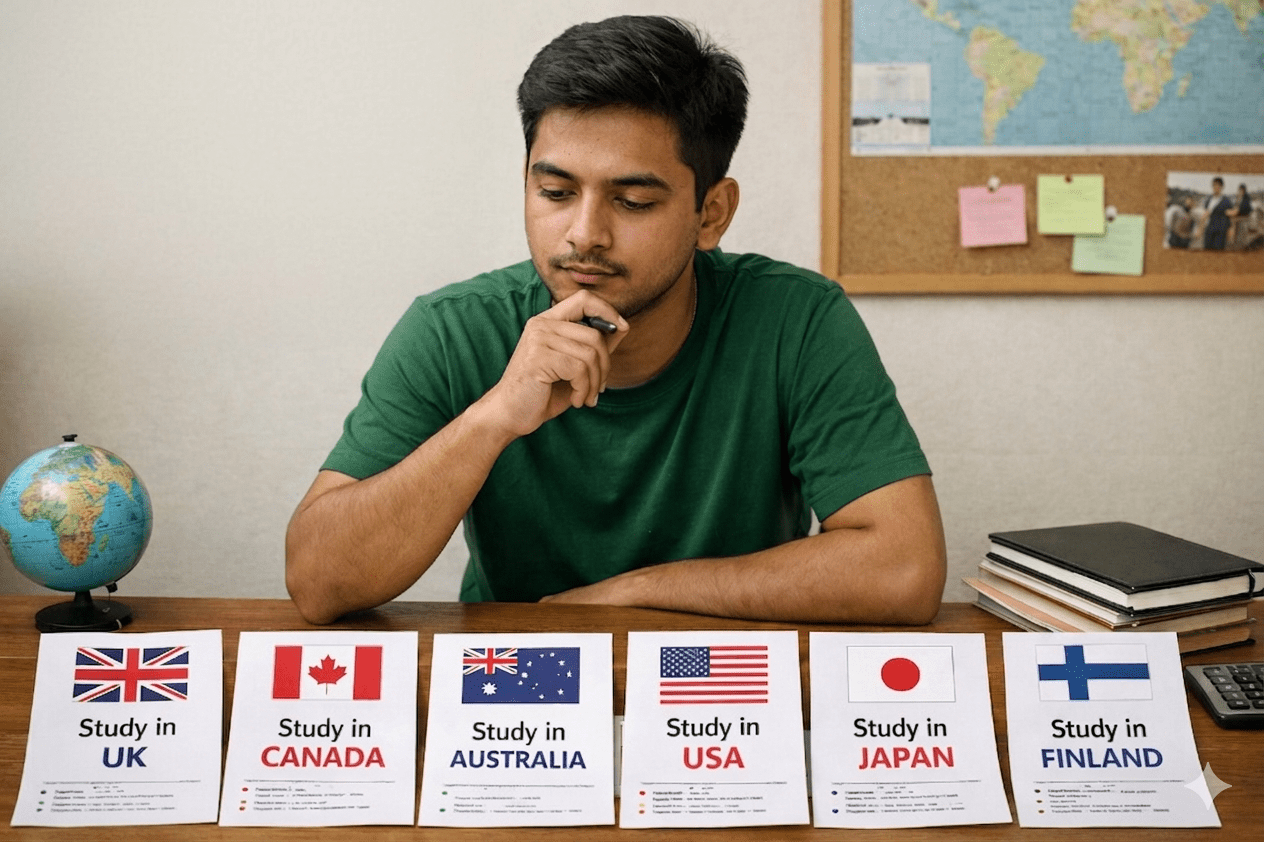
For example, the UK, Canada, Australia, the USA, Japan, and Finland all have different systems, costs, and document expectations. A student who fits one destination well may struggle badly in another. Good decisions come from personal fit, not from copying someone else’s path.
- Ignoring the difference between university admission and visa approval
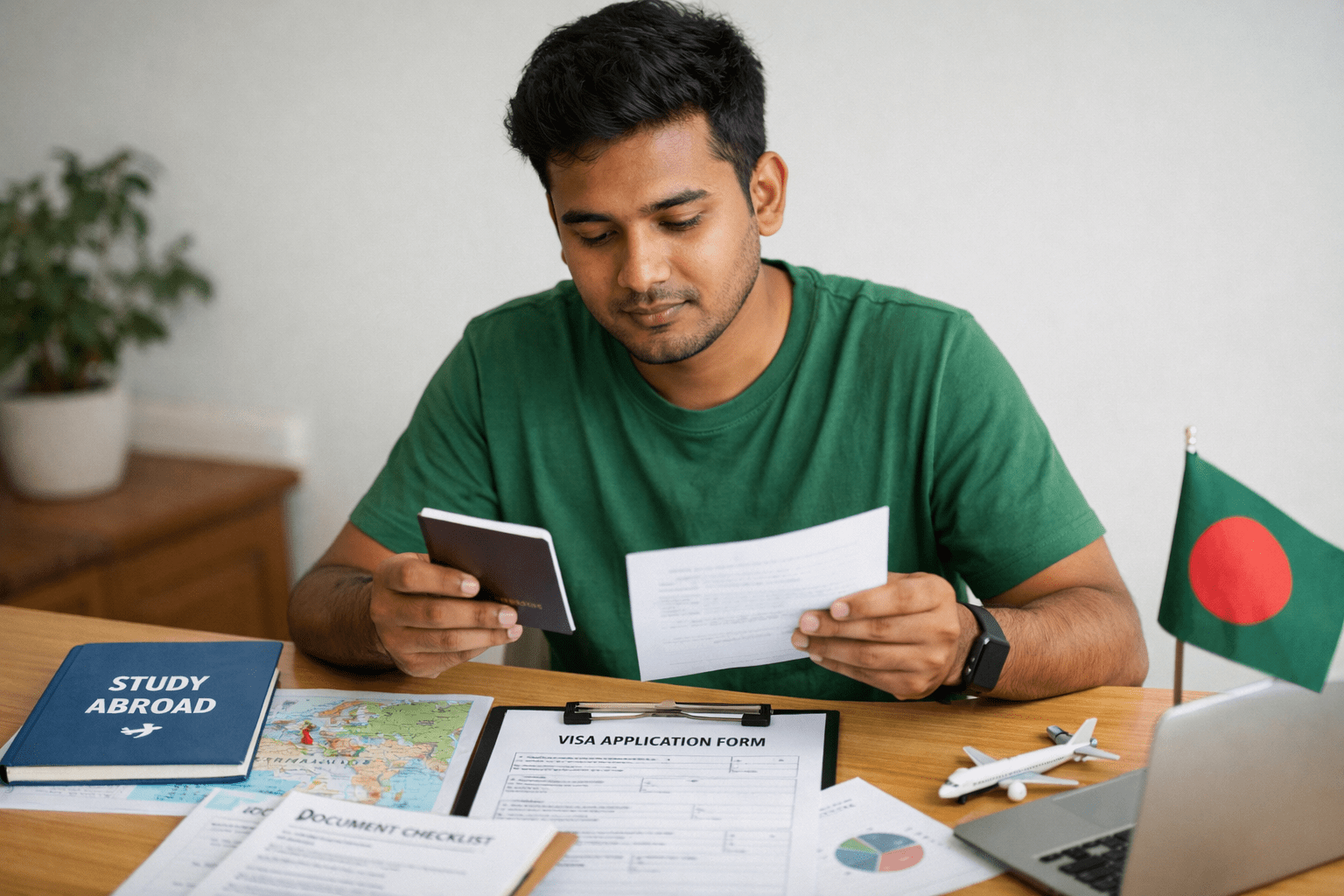
Many students think that once they receive an offer from a university, the main job is done. That is a dangerous misunderstanding. Admission and visa approval are connected, but they are not the same thing. A university may accept your academic profile, while the visa side still requires careful financial, documentary, and credibility preparation.
Students must understand that admission is only one stage. After that, the visa process requires consistency, accuracy, and country-specific readiness. If your documents, explanation, funding evidence, or application story become weak or contradictory, problems can still happen later.
- Failing to understand country-specific document rules
This is one of the most damaging mistakes. Students assume all countries ask for the same things in the same way. They do not. The UK student route centers around a valid passport and a CAS, and depending on the case may also require proof of funds, TB results, or ATAS. Canada’s study permit process is different and now often includes an LOA plus a PAL or TAL in most cases. Australia’s student route expects proper enrolment evidence and a Genuine Student response. The USA follows a school acceptance, SEVIS, I-20, DS-160, and interview flow. Japan commonly uses a Certificate of Eligibility-based route. Finland uses a residence permit for studies with accepted admission, funds, and insurance requirements.
Students who do not read the country-specific rules properly often prepare the wrong documents, rely on old information, or assume that one country’s process can be copied into another. That mistake can waste time and money very quickly.
- Submitting inconsistent or confusing information
Consistency matters more than many students realize. Your academic story, course choice, financial explanation, family support, and future plan should all make sense together. If one part of your application says one thing and another document suggests something different, the overall impression becomes weak.
For example, a student may say they are passionate about a subject but then choose an unrelated course without a clear explanation. Another student may describe one funding plan in conversation but submit documents that suggest something else. These gaps create doubt. A clean application is not only about having papers. It is about making those papers tell one believable story.
- Treating the SOP or personal statement like a copied assignment
A very common problem is the copied or over-polished statement of purpose. Students often collect sample SOPs from friends, agencies, or the internet and try to build their own statement by copying lines. That usually creates a generic document that sounds impressive on the surface but does not sound true.
A strong SOP should sound clear, personal, and academically sensible. It should explain why you want to study that subject, why the destination makes sense, and how your background connects to your next step. When a statement sounds artificial, exaggerated, or disconnected from the student’s real profile, it hurts the application instead of helping it.
- Weak financial preparation from the beginning
Many Bangladeshi families focus first on admission and only later begin serious financial planning. That order creates stress. Students should discuss affordability honestly before applications go too far. Tuition, living costs, visa costs, health-related charges where applicable, travel, and emergency expenses all need realistic planning.
Financial readiness is not only about showing money. It is about showing stability, clarity, and responsible planning. Families should understand what they can truly support, what must be documented properly, and which country fits their financial comfort. Students who avoid this conversation early often face disappointment later.
- Hiding academic gaps, refusals, or weak areas instead of explaining them properly
Some students think a weakness should simply be hidden. That is rarely wise. If you have a study gap, a change of subject, a lower result than expected, or even a previous refusal in some cases, the better approach is usually to explain it honestly and clearly where appropriate, not to pretend it never happened.
A transparent explanation is far stronger than an incomplete story. Visa and admission preparation often become weaker when students try to protect themselves by being vague. Clarity builds credibility. Confusion weakens it.
- Depending too much on hearsay and unofficial advice
This is especially common in Bangladesh. One student says something in a Facebook group, another hears something from a cousin, someone else repeats a rule from two years ago, and suddenly students begin making serious decisions based on rumours. That is extremely risky.
Visa and admission systems change. Country rules change. Document expectations change. Students should always check the latest official guidance and work from current information, not recycled gossip. What was true for another student in another intake may not fit your case at all.
- Not preparing for communication, interviews, and follow-up
Many students think the job is finished once documents are submitted. But professional communication matters throughout the journey. Students should learn how to write clear emails, respond on time, understand instructions, keep digital copies organised, and stay ready for follow-up questions or interview-related steps where applicable.
This does not mean students need to sound perfect. It means they need to sound responsible. Universities and visa systems often test readiness indirectly through how a student communicates, prepares, and responds. A careless communication style can make a serious student look unprepared.
- Forgetting the practical basics
Sometimes the biggest delays come from very basic issues. An expiring passport, mismatched spellings, missing transcripts, poor scans, unclear bank papers, or not knowing where original documents are kept can create more trouble than students expect. These are simple problems, but they become expensive problems when discovered late.
That is why I always advise students to prepare a clean starter file before they become emotionally attached to any one university or country. Keep your passport valid, your academic records collected, your digital copies organised, and your family aligned on the plan from the beginning.
- Thinking the process is only about getting out of Bangladesh
This may be the deepest mistake of all. Some students become so focused on leaving that they forget why they are going. Study abroad should not be treated like an escape plan without academic direction. It should be a structured educational decision. If you do not know what you want to study, why you want to study it, and what kind of life you are preparing for, then even a successful visa does not automatically create a successful future.
The strongest students are the ones who treat study abroad as a serious long-term decision. They understand that admission, visa, travel, and university life are all connected. They prepare not only to go abroad, but to succeed once they arrive.
My final advice to Bangladeshi students
Do not let avoidable mistakes define such an important chapter of your life. Start early. Be honest about your profile. Understand the country before choosing it. Prepare your documents carefully. Plan finances realistically. And always remember that a strong application is not the one that looks dramatic. It is the one that looks clear, credible, and well prepared.
When students approach the process with maturity and the right guidance, their options become much stronger. In my experience, many application problems can be prevented long before the visa form is ever opened.